Finding the right replacement part for your Honda generator can feel like navigating a maze. One wrong turn, and you end up with a component that doesn't fit, doesn't work, or worse, damages your reliable power source. The secret to smooth sailing? Mastering Honda Generator Part Identification, primarily by leveraging your machine's unique serial number. It’s the single most crucial piece of information you need to ensure a perfect match, every time.
Forget generic searches or guessing games based solely on the model name. Honda, known for its precision engineering, produces numerous variations of each generator model, often with subtle but significant differences in internal components. Your serial number acts as a DNA strand, revealing the exact specifications of your specific unit, guaranteeing you order the correct component, whether it’s a carburetor, a recoil starter, or a simple air filter.
At a Glance: Your Quick Guide to Honda Generator Part Identification
- Your Serial Number is King: It’s the most accurate identifier for your specific generator’s parts.
- Find It First: Look for a sticker or stamped plate on the frame, engine block, or casing.
- Why It Matters: Honda generators have many model versions, and the serial number differentiates them.
- Online Catalogs Are Your Friend: Honda's official parts catalog and authorized dealer sites use your serial number for precise lookups.
- Visual Aids Help: Online diagrams and exploded views confirm you’ve found the right part.
- Avoid Guessing: Don't rely on model names alone; always verify with the serial number.
The Problem with "Close Enough": Why Your Serial Number is Indispensable
Imagine walking into a store and asking for "car parts." The clerk would rightfully ask, "What kind of car?" The same principle applies, perhaps even more rigorously, to your Honda generator. Honda Power Equipment, as they themselves state, produces "many different versions of each model, each for a different application."
This isn't just about minor cosmetic tweaks. These variations can involve different ignition systems, slightly varied carburetor designs for specific emission standards, alternative engine components, or even different frame mounts. A carburetor designed for a Honda EU2200i might look nearly identical to one for an earlier EU2000i, but without the serial number, you risk ordering a part with incompatible gaskets, jets, or mounting points. That's why relying solely on a broad model name like "EU2200i" or "EM5000S" is a recipe for frustration and wasted money. Your serial number cuts through that ambiguity, leading you directly to the parts for your Honda generator that are engineered to fit and function flawlessly.
Unearthing Your Generator's ID: Where to Find the Serial Number
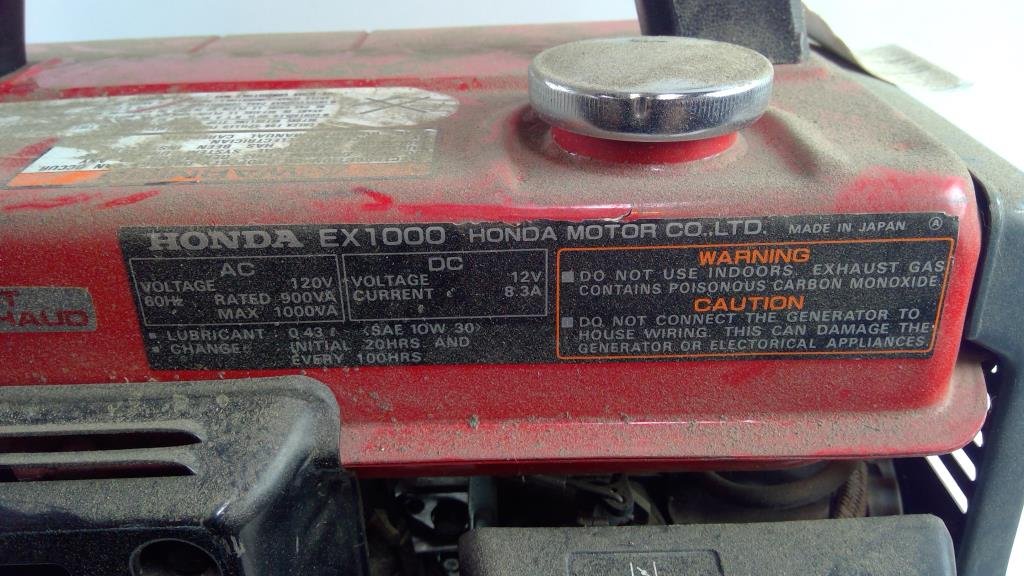
Before you can identify any Honda generator part, you first need to identify your generator itself. This means locating that all-important serial number. Honda places these numbers strategically, usually on a durable sticker or a metal plate stamped directly onto the unit.
Here’s where to typically look:
- On the Frame: Many portable generators, especially larger open-frame models (like the EB or EM series), will have a sticker or plate on one of the main frame rails. Check near the control panel, on the side, or towards the front/back.
- On the Engine Block: For many Honda engines, particularly those used in various power equipment, the engine serial number is stamped directly into the engine block itself. This is often on a flat, machined surface, sometimes near the spark plug, oil fill cap, or under the fuel tank. This is distinct from the generator serial number, but often interchangeable for engine-specific parts.
- Near the Control Panel: On smaller, enclosed inverter generators (like the EU series), you'll often find a durable sticker on the exterior casing, sometimes on the side or underneath the control panel.
- Underneath the Unit: In some cases, particularly with compact models, the sticker might be on the bottom of the unit, requiring you to tip it slightly to view.
- Owner’s Manual: If you still have your original owner’s manual, it often has a dedicated section for recording your model and serial numbers.
A Quick Tip: Take a clear photo of the serial number once you find it. Store it on your phone or in a digital document. This way, you don't have to go hunting for it every time you need to look up a part.
What If the Serial Number is Faded or Missing?
This is a common dilemma, especially with older or heavily used generators. If your serial number is unreadable:
- Check All Locations: Thoroughly inspect every surface. Sometimes a small corner is still legible.
- Try Rubbing/Lighting: Gently rub chalk or a soft pencil over a stamped number to make the indentations stand out. Use a flashlight at different angles.
- Consult Your Owner's Manual/Purchase Records: As mentioned, your manual or original sales receipt might have it.
- Look for Model-Specific Sub-Identifiers: Some models might have a secondary code or series of letters/numbers on other components. These are less reliable but can sometimes narrow down options.
- Contact a Honda Dealer: If all else fails, a certified Honda dealer might be able to help identify your unit based on unique features or by cross-referencing other component numbers, though this is often a more challenging and less precise method.
Crucial Warning: If you cannot find a serial number, ordering parts becomes a high-risk endeavor. You might need to compare images and specifications meticulously, or even physically remove the part and bring it to a dealer for identification. This underscores why securing that serial number is paramount.
Your Digital Toolkit: Using Online Resources for Part Identification
Once you have your serial number in hand, a world of precise part identification opens up. Honda and its authorized dealers provide excellent online resources to help you.
Step-by-Step: Using Honda's Official Parts Catalog
Honda's online Parts Catalog (as highlighted by our research) is your primary and most reliable tool. Here’s how to use it:
- Navigate to the Official Honda Power Equipment Parts Website: You'll typically find a prominent link to "Look Up Honda Power Equipment Parts Online" (like peparts.honda.com/powerequipment).
- Enter Your Serial Number: This is the critical step. Input the full serial number precisely as it appears on your generator. Do not include spaces or hyphens unless they are part of the official number sequence.
- Select Your Model (If Prompted): Sometimes, after entering the serial number, the system might confirm your model name. Verify this.
- Browse Diagrams and Schematics: The catalog will then present you with a series of exploded-view diagrams for different sections of your generator (e.g., "Engine," "Frame," "Fuel Tank," "Control Panel").
- Identify the Relevant Section: Click on the diagram that corresponds to the part you need. For instance, if you need a new spark plug, you'd look under the "Engine" or "Cylinder Head" diagram. If you need a new wheel, you'd look under "Frame" or "Wheel Kit."
- Locate the Part on the Diagram: The diagrams are numbered. Find the specific component you need within the visual.
- Match to the Part List: Below the diagram, there will be a corresponding numbered list of parts, including the part number, description, and sometimes the quantity required. Cross-reference the number from the diagram to this list to get the exact Honda part number.
- Verify and Purchase: Double-check the part number and description. You can then often add the part directly to a cart or use the part number to search for it on authorized dealer websites.
Utilizing Authorized Third-Party Dealer Websites (e.g., PartsTree)
Many authorized Honda Power Equipment dealers, like PartsTree (referenced in our ground truth), also offer similar online parts lookup tools. These sites often pull from Honda’s official data but might offer additional features like inventory checks, competitive pricing, or alternative shipping options.
The process is largely similar:
- Select Honda as the Brand.
- Select "Generators" as the Equipment Type.
- Enter Your Model Number (Initially): Some third-party sites might ask for your general model number (e.g., "EU2200i") first, then use the serial number to narrow down the specific version.
- Enter Your Serial Number (Crucially): Just like Honda's site, the serial number is what truly refines the search to your exact unit.
- Browse Diagrams and Part Lists: Proceed as you would on Honda's official site, using the diagrams to visually identify and confirm the part number.
Why use both? Sometimes one interface is easier to navigate, or one site might show current stock levels more clearly. Having multiple reliable options ensures you can always find what you need.
Key Information You'll Uncover: Beyond Just the Part Number
When you use your serial number with these online catalogs, you're not just getting a string of numbers. You're gaining access to a wealth of detail:
- Exploded Views: These diagrams are invaluable. They show how every component fits together, often in the correct order, which can be immensely helpful for reassembly after a repair.
- Precise Part Numbers: These are unique identifiers that guarantee you get the exact manufacturer-specified component. Generic or aftermarket parts might work, but the official Honda part number is the benchmark for quality and fit.
- Part Descriptions: Clear names for each component, helping you confirm you're looking at the right item.
- Quantity Required: Often indicated, preventing you from accidentally ordering too few or too many of a particular fastener, washer, or gasket.
- Component Groupings: Parts are logically grouped (e.g., "Carburetor Assembly," "Cylinder Head," "Fuel Tank Components"), making it easier to find related items or troubleshooting entire systems.
This level of detail makes you an informed consumer and empowers you to confidently order the precise component needed for your generator.
Common Parts You Might Need to Identify (and Why Precision Matters)
Let's look at a few common components and why using your serial number for their identification is non-negotiable:
- Spark Plugs: While many look similar, the correct heat range, gap, and thread size are critical for optimal combustion and engine longevity.
- Air Filters: Even within the same model name, Honda might use different air filter elements or housings based on production year or specific region. An ill-fitting filter won't seal properly, allowing dirt into your engine.
- Carburetors: This is perhaps the most critical component where serial number accuracy counts. Carburetors are finely tuned instruments. Slight variations in jet sizes, choke mechanisms, or mounting patterns (due to emission regulations or engine revisions) will lead to poor performance or a non-starting generator.
- Recoil Starters: The number of teeth, mounting bolt patterns, and spring tension can vary significantly. A mismatch means your generator won't start manually.
- Automatic Voltage Regulators (AVRs): These electronic components are delicate and highly specific. Using the wrong AVR can cause unstable power output or damage the generator's alternator.
- Fuel Caps & Fuel Filters: While seemingly minor, a non-venting or ill-fitting fuel cap can cause fuel delivery issues, and the wrong fuel filter can fail to protect your engine from contaminants or restrict fuel flow.
For any of these, a precise identification guided by your serial number isn't just helpful; it's essential for the proper functioning and longevity of your Honda generator.
Pitfalls to Avoid: Don't Let These Traps Derail Your Part Search
Even with your serial number, it's easy to make mistakes. Be aware of these common pitfalls:
- Relying on "Looks Like It": Just because a part looks identical in a photo doesn't mean it is identical. Subtle differences in dimensions, mounting holes, or internal workings are common with Honda variations. Always trust the part number.
- Ignoring Part Revisions/Updates: Honda, like all manufacturers, occasionally revises part designs. The catalog linked to your serial number will show the latest compatible part, which might have a slightly different number than your original but is the correct, updated replacement. Don't be alarmed if the old number doesn't perfectly match the new one; trust the system's recommendation.
- Buying "Generic" or "Universal" Parts Blindly: While some aftermarket parts are high-quality, many are not precisely engineered. Always check if an aftermarket part explicitly states it's compatible with your specific Honda part number, not just a broad model.
- Misreading the Diagram: Take your time with the exploded views. Ensure you're selecting the exact component you need, not a surrounding bracket, washer, or bolt. Use the accompanying part list to cross-reference the diagram number with the description.
- Forgetting Related Components: If you're replacing a gasket, you might also need new O-rings or seals. If replacing a carburetor, new fuel lines or clamps might be wise. The diagrams are good for showing these related parts, encouraging you to consider a complete repair.
When to Seek Expert Help (and What to Bring)
While identifying parts with your serial number empowers you to handle many repairs yourself, some situations warrant professional intervention:
- Complex Internal Engine Repairs: If you're delving deep into the engine block, valve train, or crankshaft, a certified Honda technician has the specialized tools and expertise to ensure the repair is done correctly.
- Electrical System Malfunctions: Troubleshooting intricate electrical issues, especially those involving the alternator, AVR, or control panel, can be complex and potentially dangerous if not handled by a professional.
- Unreadable Serial Number & Persistent Identification Issues: As discussed, if you genuinely can't identify your unit or specific part even with careful research, a dealer can be your last resort. Bring the generator (or at least the problematic part) to them for visual inspection.
- Safety Concerns: If you're unsure about any step of the repair process, or if your generator is exhibiting dangerous symptoms (like overheating, heavy smoke, or unstable power output), err on the side of caution and consult an expert.
When seeking professional help, always provide your generator's full model name and, most importantly, its serial number. This allows the technician to quickly access the correct service manuals and parts for your Honda generator, streamlining the diagnostic and repair process.
Beyond the Repair: Proactive Part Identification for Maintenance
Part identification isn't just for when something breaks. It's a crucial component of proactive maintenance. Knowing the exact part numbers for your air filter, spark plug, fuel filter, and oil filter allows you to:
- Stock Up: Have essential consumables on hand for routine service.
- Plan Ahead: Order parts well in advance of scheduled maintenance.
- Ensure Correctness: Avoid last-minute scrambles and the risk of buying the wrong part under pressure.
Make it a habit to periodically check your generator's manual and the online parts catalog, using your serial number, to familiarize yourself with key wear items. This foreknowledge can save you significant downtime and frustration down the road.
Empowering Your Generator's Future
Your Honda generator is a significant investment, providing reliable power when you need it most. Ensuring its longevity and performance hinges on using the correct replacement parts. By understanding the critical role of your serial number in Honda Generator Part Identification, you gain the confidence and accuracy to maintain, repair, and extend the life of your machine. It’s not just about finding a part; it's about safeguarding your power, one precise identification at a time. Go forth, locate that serial number, and empower yourself with the right information.